
How to win Innovate UK funding
Updated: 3 days ago
For many SMEs, innovation funding can be the catalyst that transforms a good idea into a commercially viable product or entirely new business opportunity.
But securing funding through Innovate UK and similar programmes is becoming increasingly competitive. Strong ideas alone are not enough. In reality, most unsuccessful applications fail long before the assessor reaches the financials or commercial projections.
The applications that succeed are usually the ones that feel credible, realistic and deliverable from every angle.
At Duku, we have been awarded funding across more than 10 innovation projects through our own product development activities and have supported many more as a design, engineering and R&D partner. Through that process, one thing has become very clear:
Assessors are not looking to simply fund exciting ideas. They are looking to invest public money into projects that can realistically deliver innovation, commercial opportunity and long-term value to the UK.
That requires much more than enthusiasm and a well-designed slide deck.

Most innovation funding applications fail through weakness, not lack of potential
One of the biggest misconceptions businesses have about innovation funding is believing their idea simply needs to sound exciting enough.
In reality, most applications fail because assessors identify too many unanswered questions, weak assumptions or delivery risks.
Innovation funding is highly competitive. Your application does not need to be good, it needs to be close to perfect across technical credibility, commercial thinking and project delivery to stand a chance of success. Sounds daunting? It should do, the application process is serious work, Ai has only made it more difficult to communicate effectively to the funding board that your idea deserves consideration as it has levelled the field, but there are ways to stand out.
Assessors are actively looking for weaknesses:
unrealistic timelines
unclear technical pathways
poor understanding of manufacturing
weak commercial logic
lack of internal capability
insufficient innovation
or unclear market demand
The strongest applications are not the ones endlessly repeating how revolutionary the product is. They are the ones that clearly demonstrate the team understands both the opportunity and the challenges involved in delivering it successfully.
That balance is important.
Many businesses write funding applications as if they are pitching to an investor. Investors may occasionally overlook risks if the commercial upside is large enough. Grant assessors are usually far more pragmatic. They want to understand the risks thoroughly, see credible mitigation plans and feel confident public money is being invested responsibly.
You still need to sell the vision, but first you need to help the assessor fully understand the technology, the market and the delivery plan. Don’t make assumptions they’re fully up to speed with the exciting new technology your want to develop, the first trap is not communicating your idea effectively in the first place.
Technical credibility matters more than many SMEs expect
For hardware and physical product innovation especially, technical credibility is often the deciding factor between a successful and unsuccessful application.
Many SMEs already know their market extremely well. They understand the customer problem and commercial opportunity. Where projects often become weaker is translating that opportunity into a credible technical programme.
This is where experienced external R&D partners can add enormous value.
At Duku, we regularly help businesses define:
realistic development pathways
technical feasibility
prototype strategies
manufacturing approaches
certification planning
standards roadmaps
and risk mitigation strategies before significant development begins.
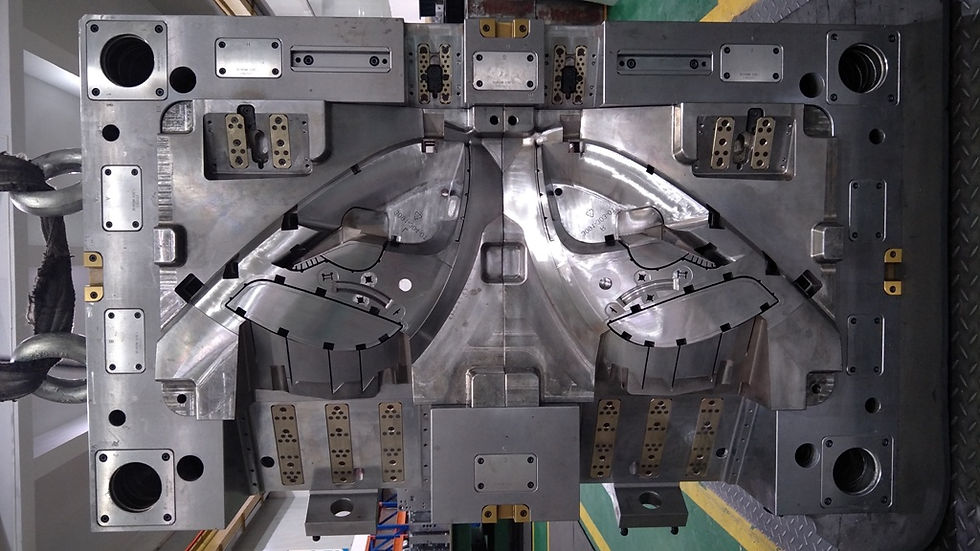
One area businesses consistently underestimate is the transition from funded development into actual production.
Production tooling, certification, compliance and manufacturing scale-up are often far larger challenges than expected. If these considerations are ignored early, businesses can reach the end of a funded project with a technically promising prototype but no commercially viable route into manufacture.
The strongest innovation projects think about these challenges from the beginning and demonstrate they understand the challenge post-funding, assessors don’t want to fund projects that only ever reach a prototype.

Assessors want confidence you can actually deliver
One of the biggest differentiators in successful applications is delivery credibility.
Funding bodies want confidence that:
the project team has a mix of talents and understands the complexity involved
risks are being approached honestly
specialist capability is available where needed
and the project has a realistic chance of becoming commercially successful afterwards
This is why collaboration is so important within innovation funding.
One of the biggest mistakes businesses make is trying to use grants to learn what experienced partners already know. Innovation projects move much faster and more efficiently when businesses focus on their core expertise while bringing in specialist partners to strengthen areas such as:
design engineering
electronics
prototyping
compliance
user testing
manufacturing
accessibility
and standards development
Strong consortiums are rarely built around companies all trying to do the same thing. The best projects bring together complementary expertise that reduces risk and improves delivery confidence.
At Duku, we regularly work alongside SMEs, manufacturers, universities, local authorities and sector specialists to strengthen both applications and project outcomes.
Good innovation comes from solving real problems
Another common weakness in funding applications is innovation that feels forced.
Assessors can usually tell when businesses are trying to retrofit “innovation” into a relatively ordinary product update simply because funding is available.
The strongest projects are usually much more grounded in genuine user problems, industry barriers or emerging market needs.
This is something we place significant emphasis on within our own projects and client collaborations. Successful innovation should be user-led, properly researched and commercially realistic.
Within our EV and accessibility work for example, the innovation has not come from creating technology for the sake of it. It has come from identifying real-world usability problems around cable handling, accessibility, safety, deployment and infrastructure adoption.
That user-led approach has helped shape projects involving:
public EV charging
fleet charging
marine charging
accessibility standards
and patented cable management technologies
many of which have progressed through funded R&D, live trials and commercialisation activities.

External R&D partners can significantly de-risk projects
Many SMEs initially see external R&D support as an additional project cost.
In reality, experienced development partners often reduce overall cost, risk and project timelines substantially.
One of the biggest advantages external partners bring is broader perspective. Internal teams are often heavily focused on their own sector or existing technical knowledge, whereas experienced product development consultancies work across multiple industries, technologies and manufacturing environments.
This creates huge intangible value through:
avoiding costly mistakes
accelerating development decisions
leveraging established supplier networks
understanding compliance requirements early
and identifying technical risks before they become expensive problems
Flexibility is another major advantage. Innovation projects rarely progress in perfectly linear ways. External development teams allow businesses to rapidly scale specialist capability up or down as projects evolve without the long-term overhead of building those teams internally.
What successful innovation projects usually have in common?
After years of working on funded innovation projects, the strongest projects usually share a few common characteristics.
They are realistic about the technical challenges involved.
They are open to external expertise and honest feedback.
They understand the commercial outcome they are trying to achieve beyond simply winning funding.
They approach risk pragmatically rather than pretending all the answers already exist.
And most importantly, they are collaborative.
The best innovation projects are rarely built by one company trying to do everything themselves. They are built by teams willing to challenge assumptions, bring together the right expertise and focus resources where they create the most value.
If there are unanswered questions within a project, that is not necessarily a weakness. In many cases, that is exactly why innovation funding exists. The danger comes when businesses pretend those questions do not exist rather than addressing them honestly and strategically.

Final thoughts
Winning innovation funding is rarely about producing the most exciting marketing pitch.
It is about building enough technical, commercial and delivery credibility that assessors believe the project has a realistic chance of generating meaningful outcomes.
At Duku, we combine product design, engineering, electronics development, prototyping and commercial thinking with extensive real-world experience delivering funded innovation projects.
Whether supporting an Innovate UK application, strengthening an investment proposition or acting as an external R&D partner during delivery, our goal is always the same:
To help businesses turn ambitious ideas into commercially viable products and scalable opportunities. Get in touch with the Duku team to discuss partnering with your Innovate UK project application.


Comments