
How Do I Find a Manufacturer for My Product?
Finding a manufacturer for your product is not simply about searching for the cheapest factory or sending an idea to a supplier. Successful product manufacturing starts much earlier with product development, prototyping and creating a manufacture specification that ensures your product is ready for production.
The right manufacturing partner should match your product type, production quantity and communication needs, while also understanding the materials, processes and assembly methods required. Whether you are developing injection moulded products, electronics or custom production components, choosing the right partner for design and manufacture is critical to long-term commercial success.
In this guide, we explain how to know when your product is manufacturing ready, what information manufacturers need before quoting, the differences between UK and Far East manufacturing and how to choose the right design and manufacturing services for your product.

How Do I Know If My Product Is Ready for Manufacturing?
Many inventors and start-ups approach a manufacturer too early with only an idea or visual concept.
“Manufacturers are production specialists, not product development teams. Their role is to produce a finished product efficiently and repeatedly, not to solve unresolved engineering or usability problems.”
Design manager, Jamie Lawrence
One of the biggest misconceptions about manufacturing is that you can move directly from an invention idea to mass production simply by contacting a factory. The more thoroughly a product is developed before tooling and production begin, the lower the manufacturing risk becomes. Only once a durable working prototype has been fully tested should a product move into manufacture.
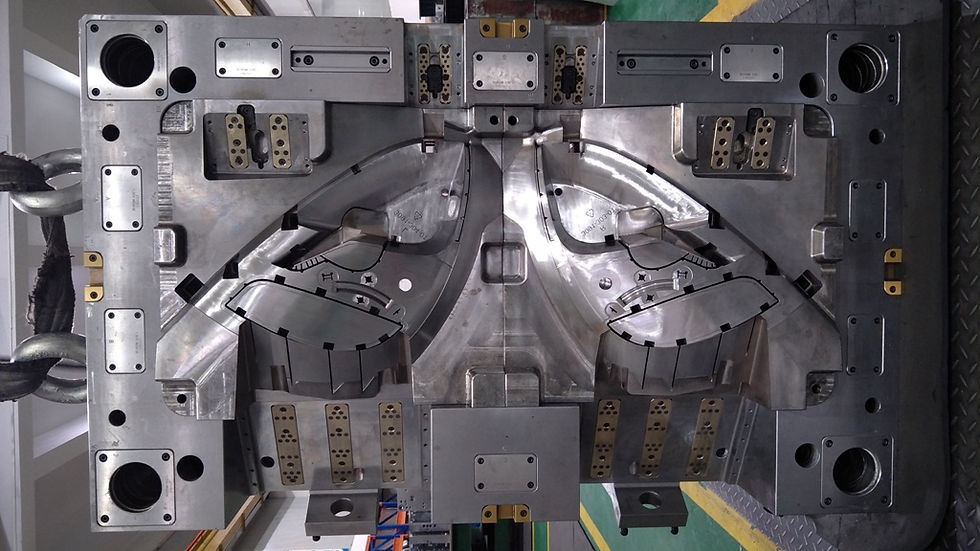
This early-stage development process often includes design for manufacture and assembly, ensuring the product is not only functional and durable but also efficient to produce at scale. This is particularly important for products requiring an injection moulding tool or complex assembly processes.
What Information Do Manufacturers Need Before Providing a Quote?
A manufacturer needs far more than a sketch or concept rendering to provide an accurate quotation. While seeing a physical prototype helps manufacturers visualise the product and identify tooling, assembly and manufacturing challenges, they also require a detailed manufacture specification pack.
A comprehensive manufacture specification typically includes:
3D CAD model files
2D technical drawings
Bill of materials (BOM)
Material specifications
Assembly instructions
Surface finish requirements
Tolerance information
Packaging requirements
This specification acts as the blueprint for production. Without it, manufacturers may make assumptions regarding materials, finishes, tolerances or assembly methods, which can lead to inconsistent quality, assembly issues and expensive production corrections later in the process.
For products involving plastic moulding service processes or injection moulded products, a clear specification is essential to ensure the tooling, materials and finishes meet production and quality expectations. A strong manufacture specification also improves communication between suppliers, supports faster and more accurate quotations and reduces manufacturing risk throughout the manufacture service process.

What Are the Most Common Mistakes People Make When Sourcing Manufacturers?
One of the most common mistakes is choosing a manufacturer purely based on price.
A manufacturer should match both your product category and your working style. They should have proven experience with the materials, manufacturing processes and production volumes your product requires. Communication is one of the biggest factors in a successful manufacturing relationship. A good manufacturer should be open to:
Meetings and factory visits
Technical discussions
Product feedback
Design for manufacture recommendations
Transparent communication
It is also important to consider how involved you want to be during production. Can you easily visit the manufacturer? Are you comfortable managing overseas communication? Do you want direct control or support from a product design company?
Choosing the wrong manufacturing partner can lead to delays, poor quality control and expensive production corrections.
What Are the Risks of Choosing the Cheapest Manufacturer?
The cheapest manufacturing quote is rarely the best long-term decision.
Low-cost manufacturers may reduce costs by simplifying quality control, using lower quality materials or prioritising manufacturing convenience over product performance and aesthetics.
This can result in:
Poor product durability
Inconsistent finishes
Assembly problems
Increased failure rates
Production delays
Expensive redesign work
Some manufacturers are also better suited to specific production quantities. Minimum order quantity (MOQ) requirements can significantly affect unit pricing and overall production strategy.
An experienced design and manufacture team will help identify manufacturers that balance quality, cost and production capability effectively.

What Are the Benefits of UK Manufacturing?
Both UK and Far East manufacturing offer distinct advantages depending on your product type, production volume and commercial goals.
UK manufacturing is often better suited to low-volume production, research and development projects and products requiring precision, faster communication and ongoing design revisions.
Working with a UK manufacturer can simplify logistics, reduce freight and import costs and allow easier collaboration through factory visits and direct communication.
What Are the Benefits of Far East Manufacturing?
Far East manufacturing is highly effective for high-volume production, particularly for products involving plastic injection moulding, electronics, metal fabrication and complex multi-part assemblies.
At larger production quantities, overseas manufacturing can become significantly more cost effective as tooling, freight and import costs are spread across a wider production run.
However, Far East manufacturing can also introduce hidden costs including freight charges, import duty, shipping delays, communication challenges and overseas quality control management.
The right manufacturing route depends entirely on the complexity of the product, expected production quantity and the level of support required throughout manufacture.

Should I Work Directly With Factories or Through a Product Design Company?
Working with a product design agency that has established manufacturing suppliers can significantly reduce risk throughout the development process. An experienced product design company can:
Negotiate better tooling and production pricing
Recommend the correct manufacturing process
Ensure products are optimised for manufacture service efficiency
Manage supplier communication
Protect product aesthetics during tooling development
Interpret technical reports and manufacturing terminology
Oversee quality control and production reviews
Most importantly, they understand the complete journey from concept design through to mass production.
This knowledge is particularly valuable for companies developing injection moulded products, custom production projects and products requiring complex assembly processes.
How Do I Start Finding Design and Manufacturing Services?
A successful manufacturing project is not simply about finding the cheapest factory. It is about creating a product that is commercially viable, manufacturable, durable and scalable.
By investing in the right product development process early, businesses can reduce manufacturing risk, improve product quality and create a far smoother route from concept to production.
Working with experienced design and manufacturing services providers can also help businesses navigate supplier sourcing, tooling development, prototype testing and production scaling more effectively, ensuring a smoother route from concept through to manufacture.
If you are considering manufacturing a new product and want guidance on where to begin, get in touch with the Duku team to discuss your project.


Comments